pátek 16. září 2016

The English Version

Three Days in Moravian Beskydy the Range

The Meadow under The Farm
The Fig.1: Aquilegia vulgaris, a common plant growing in the habitat called The Meadow under
the Farm nearby Vsetín the town. Two flowers in more detail from above. 6.10. 2016.
Taken with my smart phone.

(On Friday, 6.10. 2016)
The Fig.2: A. vulgaris, a view of "the heart of the bell". The habitat called The Meadow under
the Farm nearby Vsetín the town. 6.10. 2016.Taken with my smart phone.

Photo-studies of several common species
The Fig.3: A. vulgaris, an abundant part of the plant composition in the habitat called The Meadow
under the farm nearby Vsetín the town. 6.10. 2016. Taken with my smart phone.

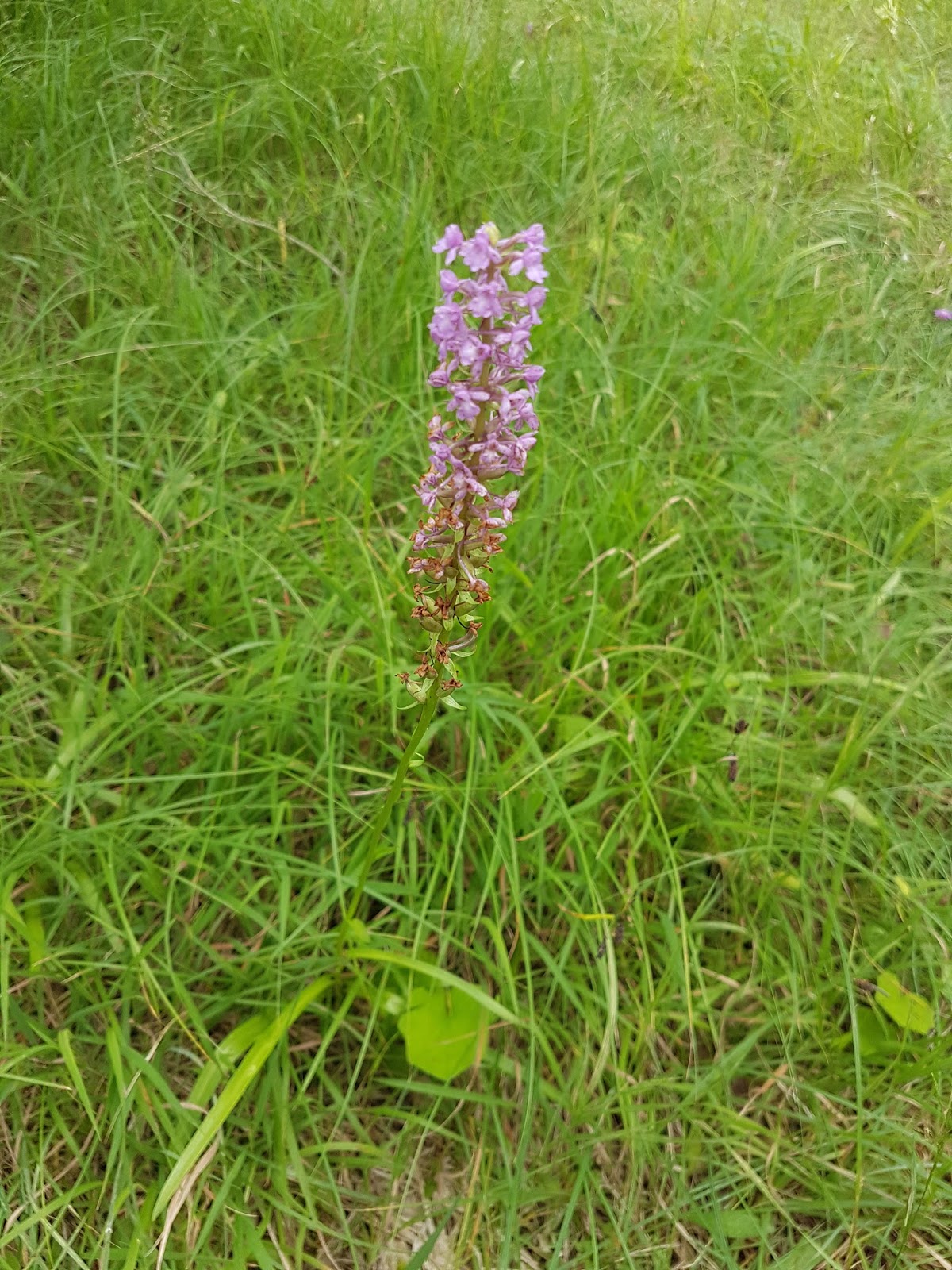
The slope had a similar character as the one in Ježůvka the habitat. But it was much poorer as for the orchid species. We found few plants of Gymnadenia conopsea, Platanthera bifolia and Orchis mascula susp. signifera. The plants were either in fruit or their spikes had only rests of last flowers. Their photos are not published here because you can see their much better forms on my photos in previous posts on this theme.
The Fig.4: A. vulgaris with white flowers found in the habitat called The Meadow under the Farm
nearby Vsetín the town. 6.10. 2016. Taken with my smart phone.

Simply, we found no rarer plants in that place. This was why I was concentrating on the more common species of plants there. I did several photo-studies of flowers in closer views in the slanted meadow. The meadow was a kingdom of Campanula glomerata, this species belonged to the most abundant plant element in its species composition. Every moment I came upon Aquilegia vulgaris, too. Also I was succeeded in finding two plants of this species with white flowers. Though both the plants were no rarities, their flowers had an interesting and beautiful morphology as you can see on the photos.
The Fig.5: A. vulgaris with white flowers in more detail. The habitat nearby Vsetín the town. 6.10.
2016. Taken with my smart phone.

Melampyrum nemorosum was next plant I photographed in the slope. At the first glance you would think that you are looking at a plant flowering with flowers in two different colors. But the violet "flowers" are no flowers but the peduncles.
The Fig.6: Melampyrum nemorosum with flowers seemingly in two colors. The habitat nearby
Vsetín the town. 6.10. 2016. Taken with my smart phone.
As we were coming back to the car I saw a beautiful plant of Cephalanthera damasonium growing alongside our way. I could not help myself to photograph this plant looking so well. So here you have one photo of an orchid at least in the conclusion of this non orchids post.

The Czech Version

Tři dny v Moravských Beskydech
The Fig.7: Our friend Vendy is entering the habitat called The Meadow under The
Farm nearby Vsetín the town. 6.10. 2016. Taken with my Canon.

(Pátek, 10.6. 2016)

Foto-studie několika běžných druhů

The Fig.8: A closer view of the opposite landscape from the top of the habitat called
The Meadow under The Farm nearby Vsetín the town. 6.30. 2016. Taken with my Canon.

Stráň měla podobný charakter jako ta na Ježůvce. Ale pokud jde o druhy orchidejí, byla mnohem chudší. Našli jsme několik málo rostlin pětiprstky žežulníku (Gymnadenia conopsea), vemeníku dvoulistého (Platanthera bifolia) a poddruh vstavače mužského znamenaného (Orchis mascula subsp. signifera). Rostliny byly buď plodné nebo jejich květenství měla zbytky posledních květů.
Snímky tu publikovány nejsou, protože v předcházejících postech na toto téma můžete vidět jejich mnohem lepší podoby.
The Fig.9: Campanula glomerata was very abundant in the habitat called The Meadow under the
Farm nearby Vsetín the town. 6. 10. 2016. Taken with my smart phone.

Prostě jsme na tom místě žádné vzácnější druhy nenašli. Proto jsem se tam soustředil na běžnější druhy. Udělal jsem v té svažité louce několik foto-studií květů v detailnějším pohledu. Louka byla královstvím zvonku klubkatého (Campanula glomerata), patřil k nejhojnějším rostlinným prvkům v její druhové skladbě. Každou chvíli jsem také narážel na orlíček planý (Aquilegium vulgaris). Rovněž se mi podařilo najít dvě rostliny tohoto orlíčku s bílými květy. I když obě rostliny nejsou žádné vzácnosti, jejich květy mají zajímavou a krásnou morfologii, jak můžete vidět na obrázcích.
The Fig.10: Flowers of Campanula glomerata in the closer detail. The habitat nearby Vsetín the town.
6.10. 2016. Taken with my smart phone.

Černýš hajní (Melampyrum nemorosum) byla další rostlina, kterou jsem v té stráni vyfotografoval. Na první pohled byste mysleli, že se díváte na rostlinu kvetoucí květy ve dvou různých barvách. Ale ty "fialové" nejsou květy, nýbrž listeny.
The Fig.11: At least one orchid in the conclusion of this non orchids post: Cephalanthera
damasonium
. Next to our way back to the car. Nearby Vsetín the town. 6.10. 2016.
Taken with my smart phone.

Jak jsme se vraceli k autu, uviděl jsem krásnou okrotici bílou (Cephalanthera damasonium) rostoucí podél cesty. Nemohl jsem si pomoci, abych tuhle rostlinu, která tak pěkně vypadala, nevyfotil. Takže tu máte alespoň jednu orchidej v závěru tohoto neorchidejového postu.

The Fig.12: Cephalanthera damasonium, its flowers in the closer detail. The same plant as on
the picture 11. Nearby Vsetín the town. 6.10. 2016. Taken with my smart phone.

Česká verze popisků pod obrázky:

Obr.1: Orlíček planý (Aquilegia vulgaris) rostoucí na lokalitě zvané Louka pod farmou poblíž Vsetína. Dva květy detailněji shora. 10.6. 2016. Pořízeno mým chytrým mobilem.

Obr.2: Orlíček planý (A. vulgaris), pohled na "srdce zvonu". Lokalita Louka pod farmou opodál Vsetína. 10.6. 2016. Pořízeno mým chytrým mobilem.

Obr.3: Orlíček planý (A. vulgaris), hojná součást rostlinné skladby na lokalitě Louka pod farmou poblíž Vsetína. 10.6. 2016. Pořízeno mým chytrým mobilem.

Obr.4: Orlíček planý (A. vulgaris) s bílými květy nalezený na lokalitě Louka pod farmou poblíž Vsetína. 10.6. 2016. Pořízeno mým chytrým mobilem.

Obr.5: Orlíček planý (A. vulgaris) s bílými květuy detailněji. Lokalita poblíž Vsetína. 10.6. 2016. Pořízeno mým chytrým mobilem.

Obr.6: Černýš hajní (Melampyrum nemorosum) s květy zdánlivě ve dvou barvách. Lokalita nedaleko Vsetína. 10.6. 2016. Pořízeno mým chytrým mobilem.

Obr.7: Přítel Venda vstupuje na lokalitu Louka pod farmou poblíž Vsetína. 6.10. 2016. Pořízeno mým Canonem.

Obr.8: Bližší pohled na protější krajinu z vrcholu lokality Louka pod farmou opodál Vsetína. 10.6. 2016. Pořízeno mým Canonem.

Obr.9: Zvonek klubkatý (Campanula glomerata) byl na lokalitě Louka pod farmou nedaleko Vsetína velice hojný. 10.6. 2016. Pořízeno mým chytrým mobilem.

Obr.10: Květy zvonku klubkatého (C. glomerata) ve větším detailu. Lokalita nedaleko Vsetína. 10.6. 2016. Pořízeno mým chytrým mobilem.

Obr.11: Alespoň jedna orchidka v závěru tohoto neorchidkového postu: Okrotice bílá (Cephalanthera damasonium). Vedle cesty zpět k autu. Nedaleko Vsetína.10.6. 2016. Pořízeno mým chytrým mobilem.

Obr.12: Okrotice bílá (C. damasonium), její květy detailněji. Tatáž rostlina jako na obr.11. Poblíž Vsetína. 10.6. 2016. Pořízeno mým chytrým mobilem.

pondělí 12. září 2016

The English Version

Our Exploration of The Second Habitat
nearby Líský The Settlement (VIII)

(7.30. 2016)

The Fig.1: A back view of the hollow with the white sandy ground. I photographed it as I was
returning to our car by a path above this interesting place. 7.30. 2016. Nearby Líský the
settlement. Taken with my smart phone.


b/ The Hollow with A White Sandy Ground

The Fig.2: This Epipactis grew out of the bare sandy ground. Notice its round capsules with
marked ribs. Nearby Líský the settlement, 7.30. 2016. Taken with my smart phone.

The Fig.3: At the first glance you can see differences between this Epipactis and the one on the
Fig.2. The capsules of this one are more cylindrical. At the first time I have seen plants of this
genus to grow in such a dry sandy substrate. Nearby Líský the settlement. 7.30. 2016.
Taken with my smart phone.


The Fig.4: Both the plants of Epipactis the genus (on the pictures 2 and 3) grew not too far from
each other. The plant with the denser spike is lower on this picture. Nearby Líský the settlement.
7.30. 2016. Taken with my smart phone.

The hall of The Nature´s Temple went on with a sandy hollow covered with vegetation in a sporadic way only. Two small pools with milky water were in its center nearer to the sandy and short slope to the right side. Here Gymnadenia conopsea subsp. densiflora was changed for a different species of the orchid. My partners were the first discoverers of next plants of Epipactis the genus growing in that hollow.

The Fig.5: Te top part of the spike of the plant on the picture 3 in more detail.
Nearby Líský the settlement. 7.30. 2016. Taken with my smart phone.

The more dramatic appearance of the whole hollow was given by an separate beaten pine growing out of the bare slope. You can see it on the picture one. According to habits of various plants of Epipactis the genus growing there I would say that more than one species had to grow there. Unfortunately, all the plants were in fruit already.
The Fig.6: A look at the hollow under the uncovered slope from the opposite side than as
it is presented on the picture 1. Semi bushes of Ononis spinosa with pink and white flowers
were dominant in this place.7.30. 2016. Nearby Líský the settlement. Taken with my smart phone.

The Fig.7: Ononis spinosa formed its low semi bushes in the Hall of The Mother Nature´s Temple.
7.30. 2016. Nearby Líský the settlement. Taken with my smart phone.

The Fig.8: A sickle like flowers and thorns of Ononis spinosa of Fabaceae the family in the closer
view. 7.30. 2016. Nearby Líský the settlement. Taken with my smart phone.
The Fig.9: Ononis spinosa, a detail of its thorn. 7.30. 2016. Nearby Líský the settlement.
Taken with my smart phone.

The Fig.10: A fully open flower of Ononis spinosa in the closer view. 7.30. 2016. Nearby Líský
the settlement. Taken with my smart phone.

I noticed more water or pond skaters on water surfaces of the two pools. They were resting on them with no motion as a spider like black points with their long slim legs stretched widely while I was observing them from a more distance. They were bathing in the warm Sun rays. But as soon as I begun to approach to the pools they started skating very fast on the water surfaces so that it was not easy to catch some of them up in detail. I adjusted a closer view of them from a more distance with a help of my Canon to photograph them as best as I could in that limited moment. The milky water helped to make their tiny bodies with long legs much more visible on my photos.
The Fig.11: Water skaters were bathing in the warm Sun rays on water surface of the small pools.
You can see them as black points on the surface of milky water. 7.30. 2016. Nearby Líský
the settlement. Taken with my smart phone.

There were more lower small thorny bushes growing in the sandy terrain of the hollow. I classified this species as to be Ononis spinosa from Fabaceae the family.


The Czech Version

Náš průzkum druhé lokality
poblíž osady Líský (VIII)

(7.30. 2016)

b/ Dolík s bílým písčitým podkladem

The Fig.12: The more detailed view of the water skaters. 7.30. 2016. Nearby Líský the
settlement. Taken with my smart phone.


Síň Chrámu Přírody pokračovala písčitým dolíkem porostlým vegetací jen sporadicky. V jeho středu poblíž písčitého a krátkého svahu vpravo byly dvě tůňky s mléčně zakalenou vodou. Tady byla pětiprstka žežulník hustokvětá (Gymnadenia conopsea subsp. densiflora) vyměněna za jiný druh orchideje. Moji partneři byli prvními objeviteli dalších rostlin rodu kruštík (Epipactis) v dolíku. 

Dramatičtější vzhled celého dolíku byl dán osamělou polehlou borovicí vyrůstající z holého svahu. Podle vzhledu různých rostlin z rodu kruštík (Epipactis), které tam rostly, bych řekl, že tam musí růst víc než jeden druh. Bohužel, všechny rostliny už byly v plodu.

Povšiml jsem si bruslařek na hladině obou tůněk. Na hladině spočívaly nehnutě jako pavoukovitě černé body s doširoka rozprostřenýma dlouhýma tenkýma nohama, zatímco jsem je pozoroval z větší vzdálenosti. Koupaly se v hřejivém slunečním svitu. Ale jakmile jsem se začal k tůňkám přibližovat, počaly na hladině velmi rychle bruslit, takže nebylo snadné zachytit některou z nich v detailu. Přiblížil jsem si je z větší dálky s pomocí Canonu, abych je vyfotil, co nejlépe, jak jsem v té omezené chvíli mohl. Mléčně zakalená voda pomohla jejich tělíčka s dlouhýma nohama na mých fotkách více zviditelnit.  

The Fig.13: The most detailed view of the pond skaters I could do. 7.30. 2016. Nearby Líský
the settlement. Taken with my smart phone. 


V písčitém terénu dolíku bylo povícero nízkých trnitých keříků. Klasifikoval jsem tento druh jako jehlici trnitou (Ononis spinosa) z čeledi bobovitých (Fabaceae).

Česká verze popisků pod obrázky:

Obr.1: Zpětný pohled na dolík s bílým písčitým podkladem. Fotografoval jsem ho při návratu k autu pěšinou nad tímto zajímavým místem. 30.7. 2016. Opodál osady Líský. Pořízeno mým chytrým mobilem.

Obr.2: Tento kruštík (Epipactis) vyrůstal z holého písčitého podkladu. Povšimněte si jeho zaoblených tobolek s nápadnými žebry. Poblíž osady Líský. 30.7. 2016. Pořízeno mým chytrým mobilem.

Obr.3: Na první pohled můžete vidět rozdíl mezi tímto kruštíkem (Epipactis) a kruštíkem na obr.2. Tobolky tohoto jsou válcovitější. Růst rostliny tohoto rodu v takovém suchém písčitém substrátě jsem viděl poprvé. Poblíž osady Líský. 30.7. 2016. Pořízeno mým chytrým mobilem.

Obr.4: Obě rostliny z rodu kruštík (Epipactis) (na obr. 2 a 3) rostly nepříliš daleko od sebe. Rostlina s hustším květenstvím je na obrázku níže. Poblíž osady Líský. 30.7. 2016. Pořízeno mým chytrým mobilem.

Obr.5: Vrcholová část květenství rostliny na obr. 3 detailněji. Opodál osady Líský. 30.7. 2016. Pořízeno mým chytrým mobilem.

Obr.6: Pohled na dolík pod odhaleným svahem z opačné strany než jak je uvedeno na obr.1. Polokeře jehlice trnité (Ononis spinosa) s růžovobílými květy byly na tomhle místě dominantní. 30.7. 2016. Poblíž osady Líský. Pořízeno mým chytrým mobilem.

Obr.7: V síni Chrámu Matky Přírody tvořila své nízké polokeře jehlice trnitá (Ononis spinosa). 30.7. 2016. Poblíž osady Líský. Pořízeno mým chytrým mobilem.

Obr.8: Srpovité květy a trny jehlice trnité (Ononis spinosa) z čeledi bobovitých (Fabaceae) v bližším pohledu. 30.7. 2016. Poblíž osady Líský. Pořízeno mým chytrým mobilem.

Obr.9: Jehlice trnitá (Ononis spinosa), detail jejího trnu. 30.7. 2016. Poblíž osady Líský. Pořízeno mým chytrým mobilem.

Obr.10: Plně otevřený květ jehlice trnité (Ononis spinosa) v bližším pohledu. 30.7. 2016. Poblíž osady Líský. Pořízeno mým chytrým mobilem.

Obr.11: Na hladině tůněk se ve slunečních paprscích koupaly bruslařky. Můžete je vidět jako černé body na hladině mléčně zakalené vody. 30.7. 2016. Poblíž osady Líský. Pořízeno mým chytrým mobilem.

Obr.12: Detailnější pohled na bruslařky. 30.7. 2016. Poblíž osady Líský. Pořízeno mým chytrým mobilem.

Obr.13: Nejdetailnější pohled na bruslařky, který jsem dokázal udělat. 30.7. 2016. Poblíž osady Líský. Pořízeno mým chytrým mobilem.

neděle 11. září 2016

The English Version

My Magical Memories of Tenerife (XI)
The Fig.1: Our aircraft was going to land on the Amsterdam airport. It was the first inter landing
on our fly to Tenerife. You can see wind mills, geometric fields of various hues of green and
brown as well as white clouds and their shadows cast on the ground in the deepness under the aircraft.
Taken with my smart phone.

On A Suffering from The Lack of Nicotine as well as
On The Training and Running Maniacal Psychosis (TRMP)
The Fig.2: Walking alongside the docks we could observe
manifold training tools offering their services to your body.
They are as ordinary as a bench in a park in Tenerife.
Taken with my Canon.

Well, yesterday (8.24. 2016) we arrived at Prague again after three overflies: from Tenerife to Madrid, from Madrid to Amsterdam and from Amsterdam to Prague. The sky was blue and clear for all the time of our flies and then I could observe manifold samples of landscapes deeply under our air crafts. Also I could take many shots of them through small windows of the flying human inventions bearing us on their boards. At least but not last I could record some audio-video samples at the occasions. Especially I am proud of the start of our air craft from the airport in Amsterdam and of the following landing on the Prague airport of V. Havel.
The Fig.3: Next example of the great support of the health propaganda in
Tenerife, The Canary Islands. Taken with my Canon.

As you could notice I changed the title of this cycle devoted to our stay at Tenerife the island. Yes, now the hot reports have become the magical memories.

One drawback from one smoker. We had to wait for the next aircraft for the longest time at the Madrid airport and this was a hard time to the smokers because we could find neither room for them. Either we did not find it or it was not there at all. Unlike Madrid Amsterdam was much more kind to us. Its airport has thought of this sort of people and we could satisfy our need with no problem because there has been installed two smoking rooms in the airport inner room. If we did not find any smoking room at the Madrid airport despite of its existence in its rooms then I apologize. On the other hand I must thank the Amsterdam´s airport leadership for thinking of all needs including the ones of the smokers.
The Fig.4: The cranes and the training tool seem to have something in common.
A technocratic access to the elixir of eternal life I would say. Tenerife.
Taken with my Canon.

At the first time I met the cigarette boxes with the disgusting photos at Tenerife. This trend should be realized in Czech republic, too. I must state that the pictures had no influence on my smoking. I recorded only one reaction with myself: yet more strong averse to this anti smoking campaign. I would expect the cars to be decorated with similar repelling pictures but this bad habit has still been quite OK according to the invisible hand of the market. Everybody has been indifferent to the cars parking on pavements determined to walkers and the abuses of drugs and alcohol behind the wheel has not still been paid the same attention as it has been in the case of the smokers. By this way I could enumerate a lot of similar examples which have not been submitted to the similar measures as it has been with the nicotine users. I saw many smoking islanders during my stay at Tenerife as well as numbers of people obsessed with the running and training maniacal psychosis. I am curious very much about the time when the health police start to prohibit and persecute the enormous physical efforts with these maniacal people. Maybe, someday in the future the health police will recommend smoking again to compensate the suicidal physical activities of still increasing numbers of the stupid men who has believed that the sport has been the right way to immortality.
The Fig.5: The main source of the electricity in Tenerife - there are two oil towers
behind me. Really, the electric energy has been made of oil
exploited the sea in this biggest island of the Canary Islands.
Taken by my son with my Canon.


The Czech Version

Mé kouzelné vzpomínky na Tenerife (XI)

Včera (24.8. 2016) jsme po třech přeletech opět dorazili do Prahy: z Tenerife do Madridu, z Madridu do Amsterodamu a z Amsterodamu do Prahy. Obloha byla modrá a čistá po celou dobu  přeletů, takže jsem mohl pozorovat rozmanité vzorky krajin hluboko pod našimi letadly. Taky jsem mohl udělat mnoho jejich snímků skrze okénka těch létajících lidských vynálezů nesoucích nás na svých palubách. V neposlední řadě jsem při těch příležitostech dokázal nahrát nějaké audio-video vzorky. Zvláště jsem hrdý na start našeho letadla z letiště v Amsterodamu a na následující přistávání na pražském Letišti V. Havla.
The Fig.6: Seeing this photo it occurs to me the title of the
Hemingway´s famous novel The Old man and the sea.
Tenerife, taken with my Canon. 

Jak jste si mohli povšimnout, změnil jsem titul tohoto cyklu věnovaný našemu pobytu na Tenerife. Ano, teď se horké reporty stávají kouzelnými vzpomínkami.

Jedna stinná stránka od jednoho kuřáka. Museli jsme čekat na další letadlo na letišti v Madridu nejdelší dobu, a to byl krušný čas pro kuřáky, protože jsme pro ně žádnou místnost najít nedokázali. Buď jsme ji nenašli nebo tam nebyla vůbec. Na rozdíl od Madridu, Amsterodam k nám byl mnohem laskavější. Jeho letiště na tento druh lidí myslí a my mohli naši potřebu uspokojit bez problému, protože ve vnitřním letištním prostoru jsou pro ně instalovány dvě místnosti. Pokud jsme na letišti v Madridu nenašli žádnou kuřárnu vzdor její existenci v jeho prostorách, pak se omlouvám. Na druhou stranu musím poděkovat amsterodamskému letištnímu vedení za to, že myslí na všechny potřeby včetně té kuřácké.

Na Tenerife jsem se poprvé setkal s krabičkami cigaret s nechutnými fotografiemi. Tento trend by měl být realizován také v České republice. Musím konstatovat, že ty obrázky neměly na mé kouření žádný vliv. Zaznamenal jsem u sebe pouze jedinou reakci: ještě silnější odpor vůči této antikuřácké kampani. Očekával bych, že auta budou dekorována podobnými odpuzujícími obrázky, ale tento zlozvyk je podle neviditelné ruky trhu zcela v pořádku. Každý je lhostejný vůči autům parkujícím na chodnících určených pro chodce a nadužívání drog a alkoholu za volantem není pořád věnována tatáž pozornost jako je tomu v případě kuřáků.

The Fig.7: A smoking woman. Tenerife. Taken with my Canon.

Tímto způsobem bych mohl vyčíslovat spousty podobných příkladů, jež nejsou podřízeny podobným opatřením jako u uživatelů nikotinu. Během pobytu na Tenerife jsem viděl mnoho kouřících ostrovanů a také množství lidí posedlých běhací a cvičební maniakální psychózou. Jsem nesmírně zvědavý na dobu, až zdravo-policie začne zakazovat a pronásledovat enormní fyzické úsilí u těchto maniaků. Možná jednou v budoucnu bude zdravo-policie doporučovat kouření znovu, aby kompenzovala sebevražedné fyzické aktivity stále narůstajícího množství blbců, kteří uvěřili, že sport je tou správnou cestou k nesmrtelnosti.
The Fig.8: A man suffering from the training and running maniacal psychosis
was running to his eternal youth when I caught him up with my Canon during
our stay at Tenerife.

Česká verze popisků pod obrázky:

Obr.1: Naše letadlo se chystalo přistát na letišti v Amsterodamu. Bylo to první mezipřistání při našem letu na Tenerife. Vidíte větrné mlýny, geometrická pole různých odstínů zelené a hnědé a rovněž bílé oblaky a jejich stíny vrhané na zem v hloubi pod letadlem. Pořízeno mým chytrým mobilem.

Obr.2: Podél doků jsme mohli pozorovat rozmanité cvičební nástroje nabízející své služby vašemu tělu. Na Tene jsou stejně běžné jako lavička v parku. Pořízeno mým Canonem.

Obr.3: Další příklad ohromné podpory propagandě zdraví na Tene, Kanárské ostrovy. Pořízeno mým Canonem.

Obr.4: Zdá se, že jeřáby a tréninkový nástroj mají cosi společného. Řekl bych, že technokratický přístup k elixíru věčného života. Tenerife. Pořízeno mým Canonem.

Obr.5: Hlavní zdroj elektřiny na Tenerife - za mnou jsou dvě ropné věže. Skutečně, na tomto největším ostrově Kanárského souostroví se elektrická energie vyrábí z ropy těžené z moře. Fotil syn mým Canonem.

Obr.6: Když se dívám na tuhle fotku, napadá mě titul slavné Hemingwayovy novely Stařec a moře. Tenerife. Pořízeno mým Canonem.

Obr.7: Kuřačka. Tenerife. Pořízeno mým Canonem.

Obr.8: Muž trpící cvičební a běžeckou maniakální psychózou upaloval za svým věčným mládím, když jsem ho zachytil Canonem během našeho pobytu na Tenerife.

sobota 3. září 2016

The English Version

Our Exploration of The Second Habitat
nearby Líský The Settlement (VII)

(7.30. 2016)
The Fig.1: First the path leading to our goal suggested nothing remarkable. The
wood seemed to be ordinary. But then......
7.30. 2016, nearby Líský the settlement. Taken with my Canon.

a/ Our Path to A Hidden Temple of The Nature

To find oneself in the second habitat took a short while by the car. Vendy left the settlement at the opposite direction of our arrival at it. About ten minutes later we were in the place. Vendy had to turn to the opposite side of the road because the habitat was stretching out alongside its right side at the direction of the village. There was a sylvan path climbing up slowly among trees and bushes in the place and Vendy could take a parking lot at its foot next to the road.  
The Fig.2: A while later the path became nearer and surrounding vegetation was getting denser.
We were approaching to the hall of the Natural Temple.
7.30. 2016. Nearby Líský the settlement. Taken with my Canon. 

We left the car and started climbing the path up. First the path was wider but as we were climbing it higher up it was becoming nearer. The climb up was very mild and short. My companions stepped the near path up faster than me as usually. At the first phase of our climb up I could observe common trees and bushes around me. The ground was covered with dead leaves and a crisscross of dead branches or trunks and I could state that its herbaceous composition was rather low. I did register nothing interesting from the point of botany.
But then I recorded voices of my partners out of my sight at that moment. Their voices were suggesting something remarkable, something extraordinary.
The Fig.3: We came upon this orchid on the threshold of the clearing. I knew it. Its Latin name
is Gymnadenia conopsea. But our botanists recognize three subspecies of this species in Czech
republic. See more information of this topic in my text.
7.30. 2016. Nearby Líský the settlement. Taken with my smart phone.

Well, now, before than I come back to the topic of the previous paragraph, allow me to describe a whole picture of the habitat for your imagine. It was a low and long forested back stretching out at the direction of Líský the settlement. Its most precious core, its own temple, was ciphered in a surrounding mixed wood, in a wild herbaceous and bushy growth. The whole low and long back was embodied in the surrounding man made landscape lonely as a forgotten world where the time was going in a different way than as it went on out of its boundaries. 
It was like suddenly you were entering a silent park in a busy and noisy city.
The Fig.4: The upper part of the spike of G. conopsea subsp. densiflora in more detail.
7.30. 2016. Nearby Líský the settlement. Taken with my smart mobil. 

But this was no park, this was the temple of the Nature. Now, when you have gotten an idea of its whole appearance, I can go back to my original narration.
The near path changed in a wider clearing. It was a strange place. It was an open hollow with a white sandy bed under a short slope of the same sandy character. All the open hollow was surrounded by the vegetation and besides there was a near stream running down from above at the entrance into this hall of the Nature´s Temple, if I insist upon my hyperbole with a temple, forming a wider small pool. The stream behind it disappeared in a dense growth. A while later I could see that there were next two small pools with no visible stream in the middle of the open hollow.
The Fig.5: This plant of G.c. subsp. densiflora was in fruit. The plants of this species from
Moravian Beskydy the Range were much lower and more subtle.
7.30. 2016. Nearby Líský the settlement. Taken with my smart phone.

Immediately at the entrance into this open hall I saw several stout, erect and tall plants growing at longer distances from each other. Most of their long, slim and dense spikes were in fruit. Despite this we found one plant partly in flower. The plants grew in places where the soil was covered with grassy and herbaceous growth, i.e. they grew at grassy margins of the clearing. They avoided its sandy center. I knew that it was Gymnadenia conopsea, the orchid we had already seen in Moravian Beskydy the Range. But these plants were much more stouter and taller than the ones from some habitats of Moravian Beskydy the Range. This was why I supposed that the plants in front of my eyes had to belong to a different subspecies, i.e. to one of the three subspecies of this species growing in Czech republic. But to which of them? Namely, to identify the right subspecies of this species exactly is a tease. You must know this orchid very well, you must have a long termed experience with a lot of its populations from various habitats of its occurrence in Czech republic. But neither all this needs to be sufficient.
The Fig.6: The closer view of leaves of G.c. subsp. densiflora the orchid. The same plant as
the one on the picture 5. They grow out of its base. 7.30. 2016. Nearby Líský the settlement.
Taken with my smart phone.

After this trip I sent some photos of this plant to my friend Adam Majer, the florist. He has been familiar with this habitat nearby Líský the settlement very well and he has been there for several times already. He knew that the plants of G. conopsea from the habitat nearby Líský the settlement have been ascribed by our botanic experts to the subspecies of G.c. subsp. densiflora. Some time before a botanist had written to him that the most exact identification has been accomplished by the method of the DNA comparing analysis.
The Fig.7: A part of the spike of G.c. subsp. densiflora in fruit in the closer view. The same
plant as the one on the pictures 5 and 6. Some spurs were still green. You can see dense and
tightly clustered ovaries with green stipules around the axis of the spike. The light brown rests
on tops of the ovaries are dried tepals.
7.30. 2016. Nearby Líský the settlement. Taken with my smart phone.

Well, you can see that it was worst to stay at this hall of the Nature´s Temple for a longer time. Therefore I will stay for a time of more than one post at it the same way as we stayed at the place in reality to explore its terrain in the closer way.

The Czech Version

Náš průzkum druhé lokality
nedaleko osady Líský (VII)

(30.7. 2016)

a/ Naše cesta ke skrytému chrámu přírody

The Fig.8: The top part of the spike shows more slim ovaries than the ones in its lower parts.
These flowers fade away at the latest time. The same plant of G.c. subsp. densiflora as the
one on the previous picture. 7.30. 2016. Nearby Líský the settlement.
Taken with my smart phone.
Ocitnout se na druhé lokalitě trvalo autem krátkou chvíli. Venda opustil osadu v opačném směru našeho příjezdu do ní. Asi po deseti minutách jsme byli na místě. Venda musel odbočit na protější stranu silnice, protože lokalita se rozkládá podél její pravé strany ve směru vesnice. V tom místě byla lesní cesta, která zvolna stoupala mezi stromy a keři a Venda mohl zaparkovat u jejího úpatí vedle silnice.

Opustili jsme auto a začali cestou stoupat. Zprvu byla širší, ale jak jsme vystupovali výš, zužovala se. Výstup byl velmi mírný a krátký. Moji parťáci stoupali užší stezkou rychleji než já jako obvykle. V první fázi výstupu jsem mohl pozorovat běžné stromy a keře kolem sebe. Zem byla pokryta odumřelými listy a změtí odumřelých větví nebo kmenů a já mohl konstatovat, že jeho bylinná skladba je poněkud chudá. Z botanického hlediska jsem opravdu nic zajímavého nezaregistroval.
Ale pak jsem zaznamenal hlasy partnerů v té chvíli mimo dohled. Jejich hlasy naznačovaly cosi pozoruhodného, něco mimořádného.

Teď, než se vrátím k tématu předešlého odstavce, dovolte mi, abych pro vaši představu popsal celkový obraz lokality. Byl to nízký a táhlý zalesněný hřbet, který se prostírá ve směru osady Líský. Jeho nejdrahocennější jádro, jeho vlastní chrám, je zašifrován v okolním smíšeném lese, v divokém bylinném a křovitém porostu. Celý ten dlouhý a nízký hřbet je vtělen do okolní člověkem vytvářené krajiny osaměle jako nějaký zapomenutý svět, kde čas jde jinak, než jak jde dál mimo jeho hranice. Bylo to, jako byste náhle vstoupili do tichého parku v nějakém rušném a hlučném městě.
Ale tohle nebyl park, tohle byl chrám přírody. Teď, když už máte nějakou představu o téhle lokalitě, mohu se vrátit k původnímu vyprávění.
Úzká cesta přecházela v širší mýtinu. Bylo to zvláštní místo. Otevřená proláklina s bílým písčitým dnem pod krátkým svahem téhož písčitého charakteru. Celou otevřenou proláklinu obklopovala vegetace a navíc při vstupu do téhle síně Chrámu Přírody, setrvám-li na své nadsázce s chrámem, shora stékal úzký potůček tvořící širší tůňku. Stružka za ní mizela v hustém porostu. Po chvíli jsem mohl vidět, že ve středu otevřené prolákliny jsou další dvě tůňky bez viditelného pramene.
The Fig.9: A wider part of the stream in the hall of this Nature´s Temple. Its water was milky,
surely it was due to the calciferous ground. Nearby Líský the settlement. 7.30. 2016.
Taken with my smart phone.

Bezprostředně při vstupu do této otevřené síně jsem uviděl několik statných vzpřímených a vysokých rostlin, jež rostly v delších vzdálenostech od sebe. Většina jejich dlouhých, štíhlých a hustých květenství byla v plodu. Rostly v místech, kde půdu pokrýval travnatý a bylinný porost, tj. při travnatých okrajích mýtiny. Jejímu písčitému středu se vyhýbaly.
Poznal jsem, že to je pětiprstka žežulník (Gymadenia conopsea), orchidea, kterou jsme už viděli v Moravských Beskydech. Ale tyhle rostliny byly mnohem statnější a vyšší než ty z Moravských Beskyd. Proto jsem předpokládal, že rostliny před mým zrakem musí patřit k jinému poddruhu, tj. k jednomu ze tří poddruhů tohoto druhu, které rostou v České republice. Ale ke kterému z nich? Určit totiž přesně správný poddruh tohoto druhu je oříšek. Musíte tuto orchidej znát velmi dobře, musíte mít dlouhodobou zkušenost se spoustou jejích populací z různých lokalit jejího výskytu v České republice. Ale ani tohle všechno stačit nemusí.
The Fig.10: Next plants of G.c. subsp. densiflora in fruit. 7.30. 2016. Nearby Líský
the settlement. Taken with my smart phone.

Po výletě jsem nějaké fotografie rostliny poslal příteli Adamu Majerovi, floristovi. Je s lokalitou poblíž osady Líský velmi dobře obeznámen a byl tam už několikrát. Věděl, že se rostliny pětiprstky žežulníku (G. conopsea) z lokality poblíž osady Líský botanickými znalci připisují poddruhu pětiprstka žežulník hustokvětá (G.c. subsp. densiflora). Před nějakou dobou mu jeden botanik napsal, že nejpřesnějšího určení totožnosti se dosahuje metodou srovnávací analýzy DNA.

Vidíte, že stojí za to pobýt v téhle síni Chrámu Přírody déle. Proto v ní zůstanu po dobu více než jednoho postu stejně, jako jsme na tom místě pobyli ve skutečnosti, abychom jeho terén prozkoumali důkladněji.
The Fig.11: A more detailed shot of the wider section of the small stream. You can see Juncus
bulbosus
at the right edge of the bank. 7.30. 2016. Nearby Líský the settlement.
Taken with my smart phone.

Česká verze popisků pod obrázky:

Obr.1: Zprvu cesta vedoucí k našemu cíli nenaznačovala nic pozoruhodného. Zdálo se, že les je obyčejný. Ale pak.......
30.7. 2016. Opodál osady Líský. Pořízeno mým Canonem.

Obr.2: Po chvíli se cesta zúžila a vegetace zhoustla. Blížili jsme se k Chrámu Přírody.
30.7. 2016. Poblíž osady Líský. Pořízeno mým Canonem.

Obr.3: Na tuhle orchidej jsme narazili na prahu mýtiny. Poznal jsem ji. Byla to pětiprstka žežulník (Gymnadenia conopsea). Ale naši botanikové rozpoznávají tři poddruhy tohoto druhu v České republice. Více informací o tomto tématu v mém textu. 30.7. 2016. Poblíž osady Líský. Pořízeno mým chytrým mobilem.

Obr.4: Horní část květenství pětiprstky žežulníku hustokvěté (G.c. supsp. densiflora) detailněji. 30.7. 2016. Poblíž osady Lísý. Pořízeno mým chytrým mobilem.

Obr.5: Tahle rostlina pětiprstky žežulníku hustokvěté (G.c. subsp. densiflora) byla v plodu. Rostliny tohoto druhu z Moravských Beskyd byly mnohem nižší a subtilnější. 30.7. 2016. Poblíž osady Líský. Pořízeno mým chytrým mobilem.

Obr.6: Detailnější pohled na listy orchideje pětiprstky žežulníku hustokvěté (G.c. subsp. densiflora). Stejná rostlina jako na obrázku 5. Vyrůstaly z její báze. 30.7. 2016. Opodál osady Líský. Pořízeno mým chytrým mobilem.

Obr.7: Část květenství pětiprstky žežulníku hustokvěté (G.c. subsp. densiflora) v bližším pohledu. Tatáž rostlina jako na obrázcích 5 a 6. Některé ostruhy byly pořád zelené. Můžete vidět husté a těsně kol osy květenství nahloučené semeníky se zelenými palisty. Světle zelené zbytky na vrcholech semeníků jsou zaschlé tepaly. 30.7. 2016. Poblíž osady Líský. Pořízeno mým chytrým mobilem.

Obr.8: Vrcholová část květenství ukazuje štíhlejší semeníky než ty v jeho spodnějších částech. Tyto květy zvadly nejpozději. Stejná rostlina jako na předešlém obrázku. 30.7. 2016. Poblíž osady Líský. Pořízeno mým chytrým mobilem.

Obr.9: Širší část potůčku v této síni Chrámu Přírody. Jeho voda byla mléčně zakalená. Jistě kvůli vápenatému podkladu. 30.7. 2016. Opodál osady Líský. Pořízeno mým chytrým mobilem.

Obr.10: Další rostliny pětiprstky žežulníku hustokvěté (G.c. subsp. densiflora) v plodu. 30.7. 2016. Opodál osady Líský. Pořízeno mým chytrým mobilem.

Obr.11: Detailnější snímek širšího úseku potůčku. Při pravém okraji břehu můžete vidět sítinu cibulkatou (Juncus bulbosus). 30.7. 2016. Poblíž osady Líský. Pořízeno mým chytrým mobilem. 


středa 31. srpna 2016

The English Version

Our Exploration of The Forest
nearby Líský The Settlement (VI)

(7.30. 2016, the forest nearby Líský the settlement)
The Fig.1: Small bushes of blue berries grew in dense fields not too far from the main
sylvan path dividing the forest into two parts. 7.30. 2016. Taken with my smart phone.

Several Shots of The Forest
The Fig.2: A dense net of Calluna vulgaris (the heather in English) growing on the sylvan path on
the fig.3. 7.30. 2016. Taken with my smart phone.

As I have already written we took our way back to Líský the settlement through the right part of the forest. While its left part (with our backs to the lookout and the settlement behind it) brought some findings of orchids, though in fruit only (two or three species of Epipactis the genus), its right part showed us various elements but the orchids. In fact, in this phase of our return with our faces at the direction of the lookout and the settlement behind it the right part of the forest changed in its left part.
So much for your orientation.
The Fig.3: Stubs next to the sylvan path were decorated with this mushroom, maybe it was
Trametes versicolor. 7.30. 2016. Taken with my smart phone.

Well then, walking through now the left section of the forest, first we went deeper in it, i.e. further from the sylvan path we had come to the habitat of the orchids. This sylvan path divided the forest into the two parts. It was our point of orientation in the terrain.
The Fig.4.: Fagus sylvatica (beech in English) in fruit at an edge of the right (in that moment) part of
the forest. 7.30. 2016. Taken with my Canon.

During our way through the forest I could observe something what I called a tired vegetation, i.e. the vegetation in fruit, lesser in flower in this yearly season.
The Fig.5: Larix decidua (a larch in English) in fruit at the same edge of the right part of the forest as it is on the
picture 4. 7.30. 2016. taken with my Canon.

Gradually we were turning back to the main sylvan path. By this way we returned to Líský the settlement where Vendy´s car waited for us. We took a short rest on a low wall next to the car. We were going to explore last habitat in the surroundings of Líský the settlement.
The Fig.6: There was an oak, too, in the species composition of the forest. I
suppose that this is Quercus robur. 7.30. 2016. Taken with my Canon.

The Czech Version

Náš průzkum lesa poblíž osady Líský (VI)

(30.7. 2016, les opodál osady Líský)
The Fig.7: In one moment we found ourselves on a sylvan path covered with a low vegetation.
The path was not used too much. You can see that the forest was mixed.
It consisted of both conifers and leafy trees. 7.30. 2016. Taken with my smart phone.

Několik snímků lesa
The Fig.8: The forest from inside. Its herbaceous floor was abundant in various species of plants.
7.30. 2016. Taken with my smart phone.

Jak už jsem napsal, zvolili jsme zpáteční cestu do osady Líský přes pravou část lesa. Zatímco levá část (se zády k rozhledně a osadě za ní) přinesla nějaké nálezy orchidejí, i když jen v plodu (dva či tři druhy rodu kruštík (Epipactis)), jeho pravá část nám ukazovala různé prvky kromě orchidejí. Ve skutečnosti se v této fázi našeho návratu s tvářemi ve směru rozhledny a osady za ní jeho pravá část změnila v levou.
Tolik pro vaši orientaci.

Jak jsme tedy procházeli teď už levou částí lesa, zprvu jsme do něj zacházeli hlouběji, tj. od lesní cesty, kterou jsme na lokalitu orchidejí přišli. Tato lesní cesta dělila les ve dvě části. Byl to náš orientační bod v terénu.

Během cesty lesem jsem mohl pozorovat cosi, čemu říkám unavená vegetace, tj. vegetace v plodu, méně v květu v tomto ročním období.

Postupně jsme se stáčeli zpět k hlavní lesní cestě. Tou jsme se vraceli zpět do vesnice Líský, kde na nás čekalo Vendovo auto. Krátce jsme si odpočali na nízké zídce vedle auta. Chystali jsme se prozkoumat poslední lokalitu v okolí osady Líský.

Česká verze popisků pod obrázky:

Obr:1: Keříčky borůvek rostly v hustých polích nepříliš daleko od hlavní lesní cesty dělící les na dvě části. 30.7. 2016. Pořízeno mým chytrým mobilem.

Obr.2: Hustá síť vřesu obecného (Calluna vulgaris) rostoucí na lesní cestě na obr.3. 30.7. 2016. Pořízeno mým chytrým mobilem.

Obr.3: Pařezy lesní cesty zdobila tahle houba. Snad to byla outkovka pestrá (Trametes versicolor). 30.7. 2016. Pořízeno chytrým mobilem.

Obr.4: Buk lesní (Fagus sylvatica) v plodu při okraji pravé (v té chvíli) části lesa. 30.7. 2016. Pořízeno Canonem.

Obr.5: Modřín opadavý (Larix decidua) v plodu při stejném okraji pravé části lesa jako na obr.4. 30.7. 2016. Pořízeno Canonem.

Obr.6: V druhové skladbě lesa byl také dub. Předpokládám, že tohle je dub letní (Quercus ruber). 30.7. 2016. Pořízeno Canonem.

Obr.7: V jednu chvíli jsme se ocitli na lesní cestě porostlé nízkou vegetací. Cesta se moc nepoužívala. Vidíte, že les byl smíšený. Skládal se z jehličnanů a listnáčů. 30.7. 2016. Pořízeno chytrým mobilem.

Obr.8: Les zevnitř. Jeho bylinné patro bylo hojné na různé rostlinné druhy. 30.7. 2016. Pořízeno chytrým mobilem.